
Discover game-changing insights for small businesses in Canada. Explore key statistics, sector opportunities, and strategies to overcome challenges and drive success with VIVISION Consulting.
Small businesses in Canada are the architects of Canada’s economy, shaping innovation, creating jobs, and driving community growth. Representing 97.8% of employer businesses, they’re not just contributors—they’re changemakers. At VIVISION Consulting, we analyzed the latest “Key Small Business Statistics” Report to deliver insights that matter. Here’s how you can transform insights into actions and take your business to the next level.
1. The Power of Small Businesses
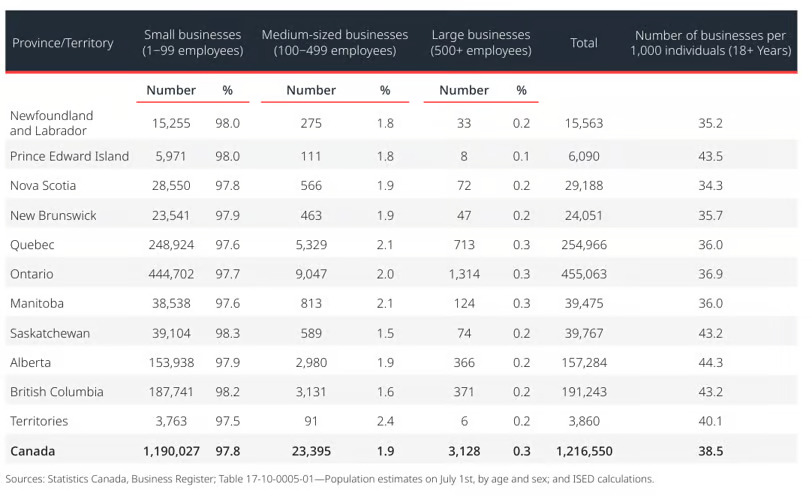
Small businesses dominate Canada’s business ecosystem. In Table 1, it can be seen that by the end of 2022, there were a total of 1,216,550 employer businesses, with the distribution by province displayed in the table.
Ontario ranks first with 455,064 businesses, holding a 37% share, while Quebec ranks second with a 21% share in terms of the number of businesses.
An important point to note is the over 98% share of small businesses (with 1 to 99 employees), highlighting the dynamic and vibrant market in Canada.
2. Sector Insights and Opportunities
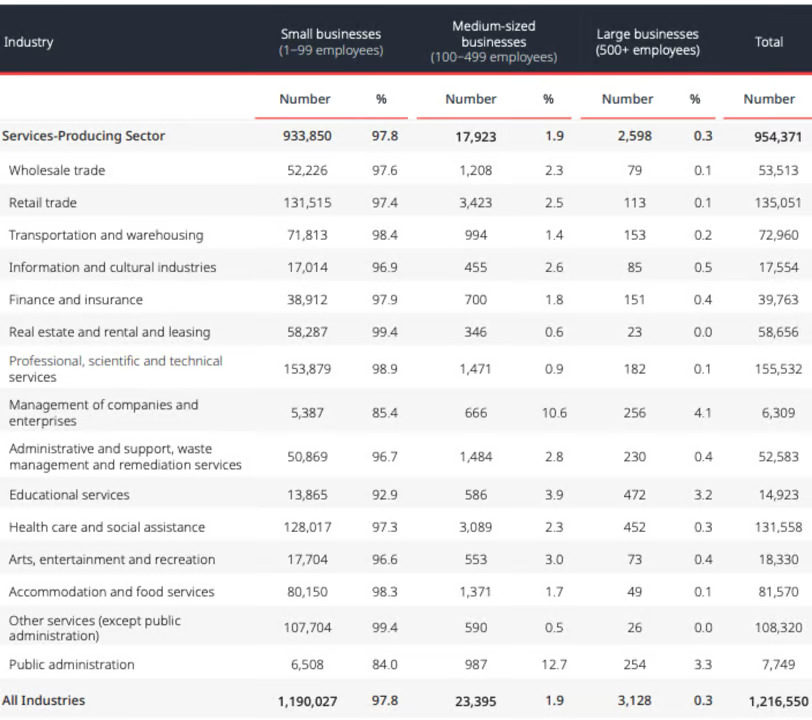
When analyzing the data through the lens of the Goods and Services market segmentation, we find that the Services sector accounts for a significant 78% of businesses in the region, while the remaining 22% operate in the Goods sector.
Deep Dive into the Goods Sector
A closer examination of the Goods sector, based on Table 2, reveals some noteworthy patterns regarding the distribution of businesses across various industries. The Construction industry dominates this sector, encompassing 58% of all businesses. This highlights the critical role construction plays in the Goods sector, driven by robust demand and continuous infrastructure development.
The second and third largest industries in this sector, each with an almost equal share of 20%, are:
Manufacturing — businesses focused on production and value-added processes.
This distribution underscores the diverse nature of the Goods sector, with industries ranging from resource-based to production-focused operations.
Deep Dive into the Goods Sector
A closer examination of the Goods sector, based on Table 2, reveals some noteworthy patterns regarding the distribution of businesses across various industries. The Construction industry dominates this sector, encompassing 58% of all businesses. This highlights the critical role construction plays in the Goods sector, driven by robust demand and continuous infrastructure development.
The second and third largest industries in this sector, each with an almost equal share of 20%, are:
Manufacturing — businesses focused on production and value-added processes.
This distribution underscores the diverse nature of the Goods sector, with industries ranging from resource-based to production-focused operations.
Deep Dive into the Services Sector
Similarly, within the Services sector, three sub-industries stand out as having the largest share of businesses:
Retail Trade: 14%, driven by consumer spending and local market demands.
Healthcare and Social Assistance: 14%, reflecting the importance of essential services and social welfare.
Insights and Implications
This segmentation provides valuable insights into the business landscape:
The prominence of Professional Services shows increasing reliance on expertise and innovation.
The equal shares of Retail Trade and Healthcare reflect both consumer trends and societal needs.
Employment Trends You Can’t Ignore
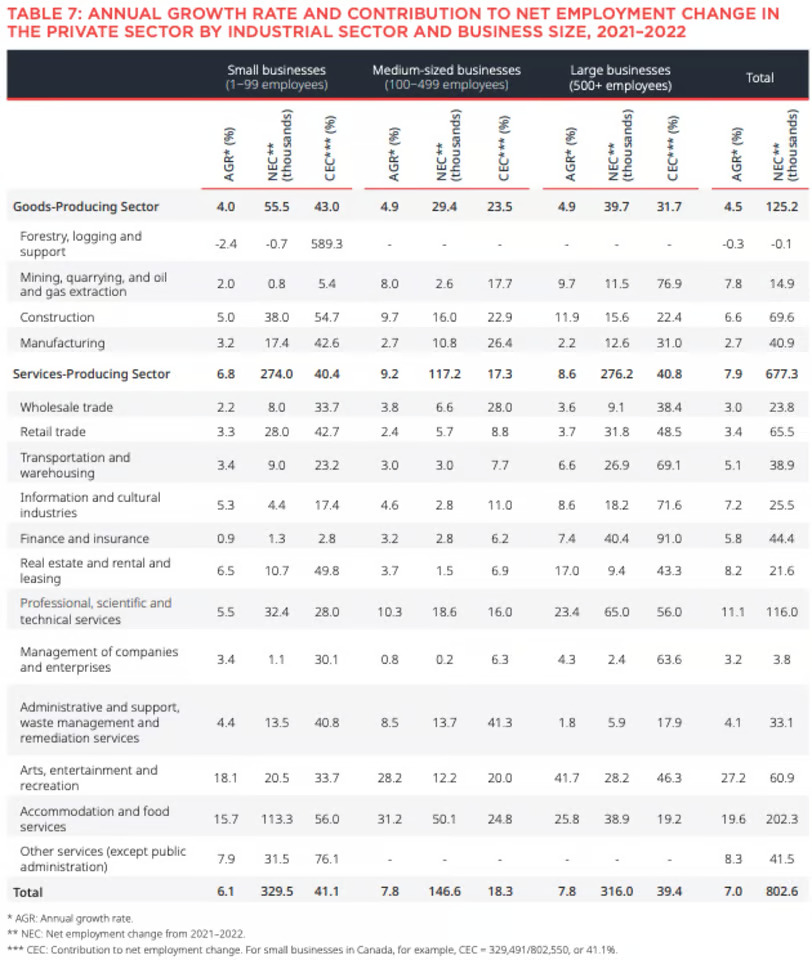
Small businesses are the driving force behind Canada’s employment growth, contributing 41.1% of private-sector jobs in 2021–2022. Key trends include:
Professional Services: +32,400 jobs
Arts and Entertainment: A growing sector with creative potential
Survival Strategies for Long-Term Success
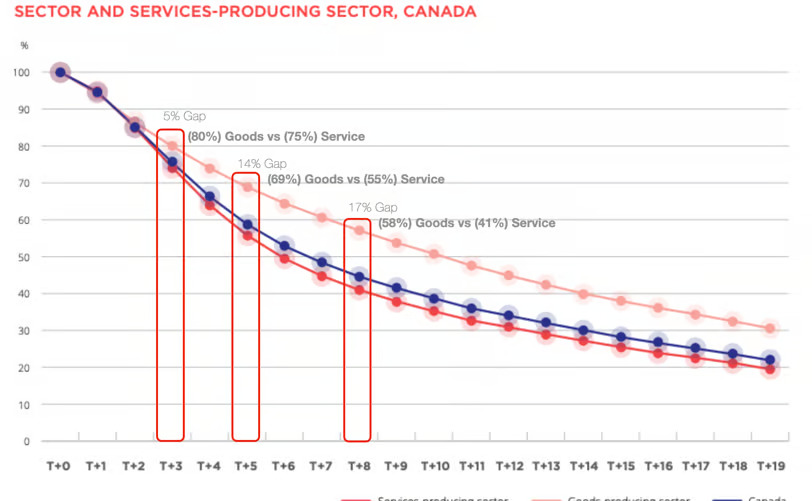
Survival rates provide a playbook for resilience:
Service Businesses: Only 41% survive beyond 8 years — adaptability is critical
Challenges and Transformative Opportunities
Small businesses face unique challenges, but every challenge is an opportunity to innovate:
Market Expansion — targeting exports and new demographics
Sustainability — embracing green practices to enhance brand value
The Blueprint for Breakthrough Success
At VIVISION Consulting, we empower businesses with actionable strategies:
Leverage Data Analytics — use insights to drive smarter decisions
Conclusion
Small businesses are the backbone of Canada’s economy, and their potential knows no bounds. By understanding the trends, leveraging data, and embracing innovation, these changemakers can transform challenges into opportunities.
Whether you’re in the Goods or Services sector, the key to success lies in resilience, adaptability, and strategic action. At VIVISION Consulting, we are dedicated to empowering your business with insights and strategies that turn visions into realities.
Together, let’s push beyond limits and unlock the full potential of your business.
